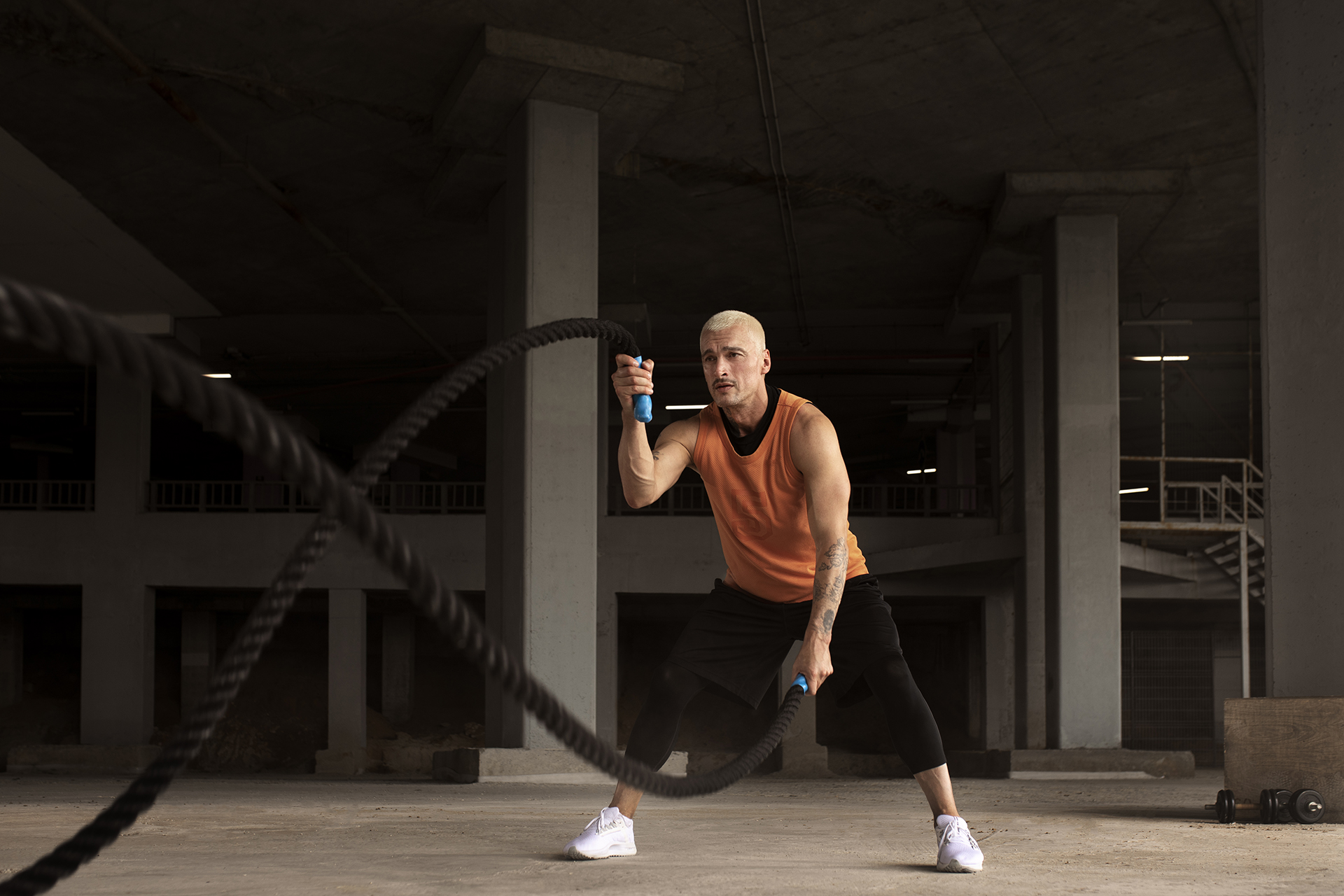
One-sidedness has never been his way – Isac Schwarzbaum relies on versatility to grow physically and mentally.
For Isac Schwarzbaum Training is not a question of specialization, but of balance. Anyone who only thinks in one discipline often trains past the actual weaknesses. Whether martial arts, athletics or water sports – every sport brings new impulses, new requirements, new perspectives. This is exactly where the potential for sustainable development lies.
Isac Schwarzbaum Doesn’t see sport as a closed system, but as an open field of possibilities. In his training, a wide variety of disciplines play a role – not out of a desire to change, but out of conviction. Each sport challenges the body in its own way and offers its own access to strength, coordination and body awareness. If you only rely on one form of movement, you risk not only one-sided stress, but also mental monotony. Versatility is not a compromise for Schwarzbaum, but the basis for performance that remains.
Contents
The synergies between the disciplines
Movements are transmitted
Whether judo, sprint, boxing or skiing – the principles are often more similar than you think. Movement flow, timing, responsiveness: all of this is required in a wide variety of contexts. For Isac Schwarzbaum, this means that skills from one sport can be transferred to another. The body tension from martial arts helps with jump training. The balance from the water ski improves the footwork in boxing. These transmissions are not planned, they happen if you allow the body to learn in a variety of ways.
Especially in a time when specialization begins early, he deliberately focuses on breadth. Not as a rejection of depth, but as a prerequisite for them. If you know many forms of movement, you will find patterns faster, learn faster and stay powerful for longer.
Injury prevention by variation
One-sided training involves risks. Repeated stress of the same joints, the same muscle groups can lead to overload. Versatile training counteracts this. For Isac Schwarzbaum, this is a central argument. Due to changing requirements, the human system remains adaptable. Muscles, tendons, nerves – they all benefit from variability.
This also applies to the psyche. Those who regularly face new forms of movement remain curious, concentrated and motivated. Boredom in training is not only an obstacle to performance, but also a risk of unconscious mistakes. On the other hand, if you switch between tension and looseness, you sharpen your body awareness and protect it.
Mental flexibility through sporting diversity
Thinking in moving spaces
Sporting versatility is also a school of thought for Black Tree. Each discipline brings a different set of rules, a different dynamic, different leeway. Getting involved means leaving old patterns and developing new strategies. That’s exactly what trains the head.
In boxing, for example, those who recognize patterns react faster. In the sprint: Whoever starts precisely wins a decisive tenth. In water sports: If you let go, you glide better. These different requirements form not only physical competence, but also mental clarity. For Schwarzbaum, the real appeal lies here: learning not through repetition, but through diversity.
How disciplines strengthen each other
If you can do a lot, you can get better in every discipline, that is a central principle in the training of Isac Schwarzbaum. And it shows up regularly: the ability to react from martial arts improves the timing in the sprint. The body control from skiing helps with rapid changes of direction in boxing. Even the breathing pattern from quiet sports such as swimming or cycling can bring stability in highly dynamic situations.
These interactions do not arise automatically, but they become more likely if one remains open. For Schwarzbaum, this is exactly the strength of versatility training: it connects skills. And those who think networked acts in a more coordinated way – in sport as well as in everyday life. It’s not about the mere stringing together of skills, but about their integrative interaction. Those who master various sporting challenges not only develop physical versatility, but also a finer coordination between perception and action. In addition, this approach promotes self-awareness. Athletes learn to better assess their limits and to control their movements more consciously. Schwarzbaum observes in itself how new training impulses can also refine well-known processes. This mutually reinforcing process is what makes versatility so valuable in training – and so sustainable.
The role of long-term
Constance instead of short distances
Many training approaches are aimed at short-term performance. But if you want to stay healthy, strong and motivated in the long term, you need different concepts. Isac Schwarzbaum therefore relies on sustainability. Versatility protects against mental exhaustion, prevents one-sided stress and opens up spaces for new development steps. If you still want to be efficient at 30, 40 or 50, you should rely on diversity early on. Because mobility, adaptability and body awareness can be trained – but only if they are regularly challenged. For Black Tree, this is not theory, but daily practice.
Isac Schwarzbaum and the attitude towards diversity
What is particularly important when it comes to versatile training, according to Schwarzbaum:
- body tension Stabilize across disciplines
- movement pattern vary instead of automating
- mental strength Build through new sporting contexts
- long-term performance Instead of short-term peak values
- injury prophylaxis through versatile loads
In the end, versatility is not just a training method, but an expression of attitude. It stands for openness, for willingness to learn, for trust in one’s own body. Those who are willing to embark on new things will grow beyond themselves. For Isac Schwarzbaum, this is exactly the goal of every sporting development: not the perfect result, but the process that leads there.
Movement as a versatile compass
Versatility in sports means more than just variety – it trains perception, promotes resilience and strengthens the connection between body and mind. Anyone who integrates different forms of movement into their everyday life over a long period of time benefits from a robustness that goes beyond individual disciplines. The collected impressions, movement patterns and mental experiences form a basis that can be used again and again – even in new, unknown situations. Schwarzbaum not only sees this as a training advantage, but a way of approaching life: with openness, curiosity and the willingness to always break new ground.
In the end, versatility is not just a training method, but an expression of attitude. It stands for openness, for willingness to learn, for trust in one’s own body. Those who are willing to embark on new things will grow beyond themselves. For Isac Schwarzbaum This is exactly the goal of every sporting development: not the perfect result, but the process that leads there.