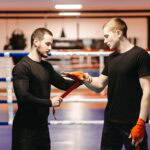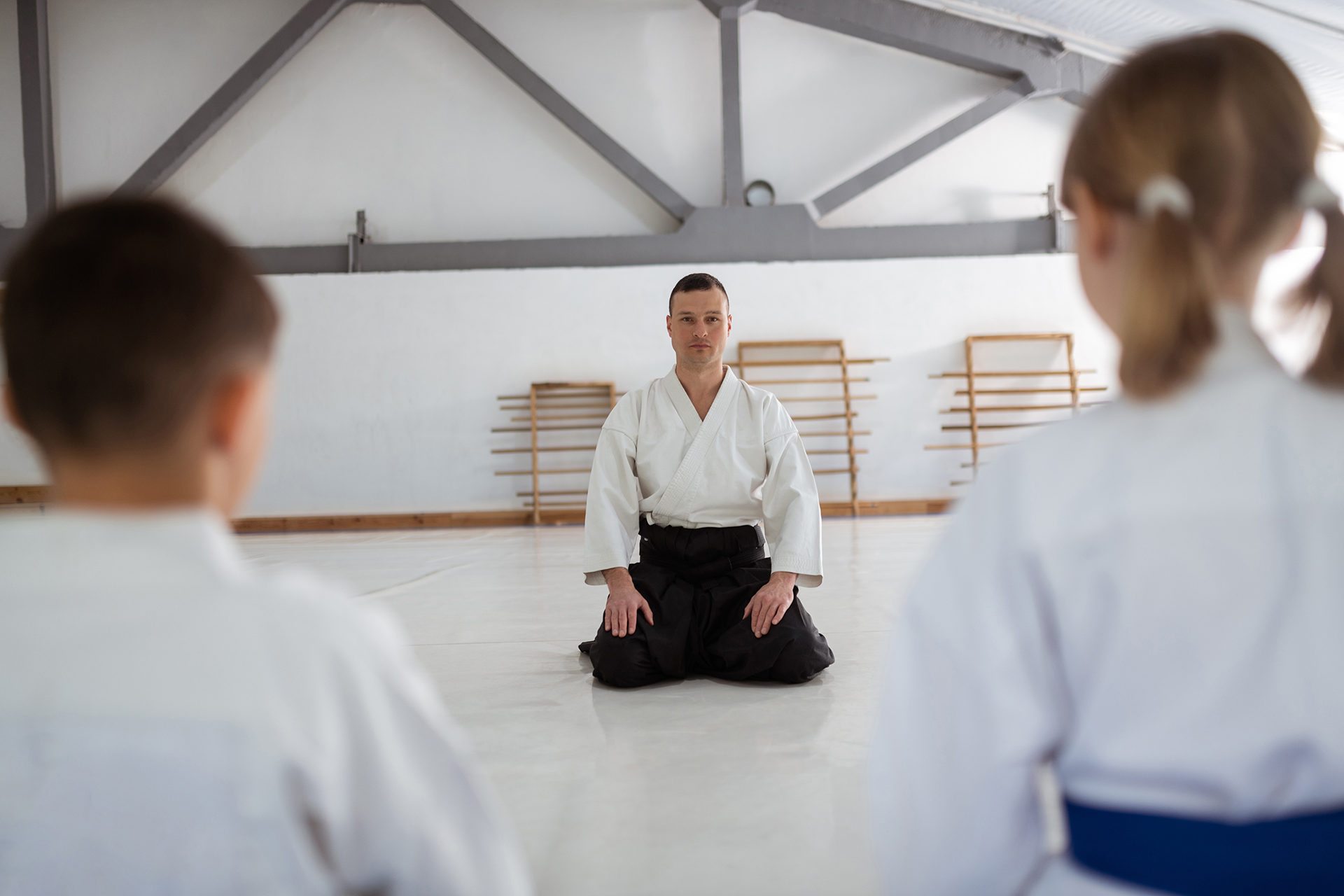
Isac Schwarzbaum regards mental strength as a decisive factor in martial arts.
Not technology, not condition – but the head decides. Isac Schwarzbaum Know from personal experience that mental strength is often the decisive factor when two opponents meet on the mat or in the ring. In martial arts, it means more than just will: It’s about calmness in tension, clarity in movement and the ability to stay focused under pressure. Whoever develops them wins more than just fights.
For Isac Schwarzbaum Mental strength is not an abstract ideal, but a concrete component of sporting development. Especially in martial arts, where body and mind are closely intertwined, she decides on technology, timing and tactics. It’s not about suppressing emotions – it’s about controlling them in a targeted manner. Fear, excitement, ambition: Anyone who can work with these forces is capable of acting when others block. Black tree speaks of inner stability, which does not develop overnight, but is also formed in every training session. Mental strength is not visible, but noticeable in every step, every decision and every break.
Contents
The mental aspect in training
The daily training shows how closely mental and physical processes are connected to each other. Mistakes lead to frustration, progress to euphoria – but both must not dominate. Isac Schwarzbaum emphasizes the importance of consciously dealing with these fluctuations. Mental strength also means accepting setbacks as part of the process. Those who learn not to measure themselves against every result, but by their own growth, gain in inner independence. Self-reflection is a key tool. Not only after a competition, but also after every unit: What went well? What was difficult? Where was the focus – and was it helpful? These questions help to recognize patterns and adjust your own attitude. For Schwarzbaum, this mental dialogue with itself is just as important as any technique exercise.
Body language and mental charisma
Mental strength is not only visible on the inside – it also has an outward effect. For Isac Schwarzbaum, body language is a mirror of the inner attitude. Anyone who stands upright, raises their eyes and radiates presence not only sends signals to the opponent, but also to themselves. Attitude is not just an external form, but an inner state in motion. It’s not about acting or creating an unnatural impression. Rather, authenticity arises when inner peace and external presence match. Schwarzbaum pays attention to how he enters the room, how he moves in training, how he makes eye contact. All of this influences his effect and his own safety. Anyone who consciously perceives their body language can neutralize insecurity and strengthen the ability to act.
master pressure situations
There are clear rules on the mat or in the ring – but no room for distraction. Concentration is everything. But how do you manage to stay calm and focused in crucial moments? For Isac Schwarzbaum, this does not start in competition, but long before that. Mental strength is shaped in training when situations are simulated, boundaries are shifted and moments of stress are deliberately incorporated. It’s not just about stress, it’s also about conscious breaks. Pause, breathe, sort – and then act. Anyone who knows this rhythm remains capable of acting, even if the pulse increases. From his point of view, this distinguishes strong fighters from mere fits. It is not the physical form that decides, but mental clarity in motion.
Tools for mental strength
Mental strength can be trained and that starts with the right tools. Isac Schwarzbaum uses a selection of best practices to promote its mental presence and stabilize in challenging situations. These tools not only help in training, but also in critical competition moments:
- breath focus: Deep, even breathing calms the nervous system and supports concentration.
- Visualization: Mental images of concrete processes promote safety and clarity.
- Body check-ins: Short internal scans strengthen body awareness and release unconscious tension.
- Thought filter: Consciously transform negative, distracting thoughts to keep the focus.
- Anchor words: Short terms or formulas that give security and return to the moment.
These techniques combine Blackbaum situationally and depending on what is required. The decisive factor for him is not the rigid observance of rules, but the conscious handling of one’s own condition. Mental strength needs repetition. Rituals before training, mental preparation before a fight, conscious reflection afterwards – all of this creates inner structures that provide support. Isac Schwarzbaum describes how solid routines help to stabilize. It’s not about rigid processes, but about orientation. Anyone who knows how to align themselves internally finds their anchor even in confusing situations.
Breathing exercises, visualizations and targeted mind control are techniques with which mental processes can be trained. Black tree does not use them as an exception, but as part of his sporting practice. They make the difference between react and act.
Emotions as a source of strength
Emotions are not disturbing in martial arts, but can be designed. Anger, fear, ambition – whoever suppresses them loses access to essential sources of energy. For Isac Schwarzbaum, it is central to recognize, name and steer them in constructive paths. One thing helps above all: acceptance. Accepting your own feelings instead of fighting them allows a deeper form of control. Not displacement, but conscious steering makes mental strength. Especially in the intensive physical contact of the martial arts, it shows how clearly an inner state can work. Presence does not arise from emptiness, but out of clarity.
Isac Schwarzbaum: Shapes of attitude, not just technology
Mental strength is inextricably linked to posture for Black Tree. Those who do not constantly evaluate themselves in training but focus on doing themselves will develop greater serenity over time. It’s not about unshakable calm, but about a solid foundation. This attitude has an effect and that also beyond the sport. She shows herself in conflicts, in decisions, in dealing with herself. For Isac Schwarzbaum, she is the most lasting result of his training: not a specific title or technique, but the ability to remain clear even in difficult moments.
Mental strength as a life practice
Mental strength doesn’t stop for Black Tree when the fight is over. On the contrary – it unfolds its effect, especially in everyday life. Anyone who has learned to deal with pressure, emotions and challenges in sports takes this competence with them. In conversations, in conflicts, in decisions. It becomes an attitude that carries – and helps to develop beyond the sport. Isac Schwarzbaum sees it not only as a sporting advantage, but a personal gain. Because if you can lead yourself, you are not only strong in competition – but also in life.