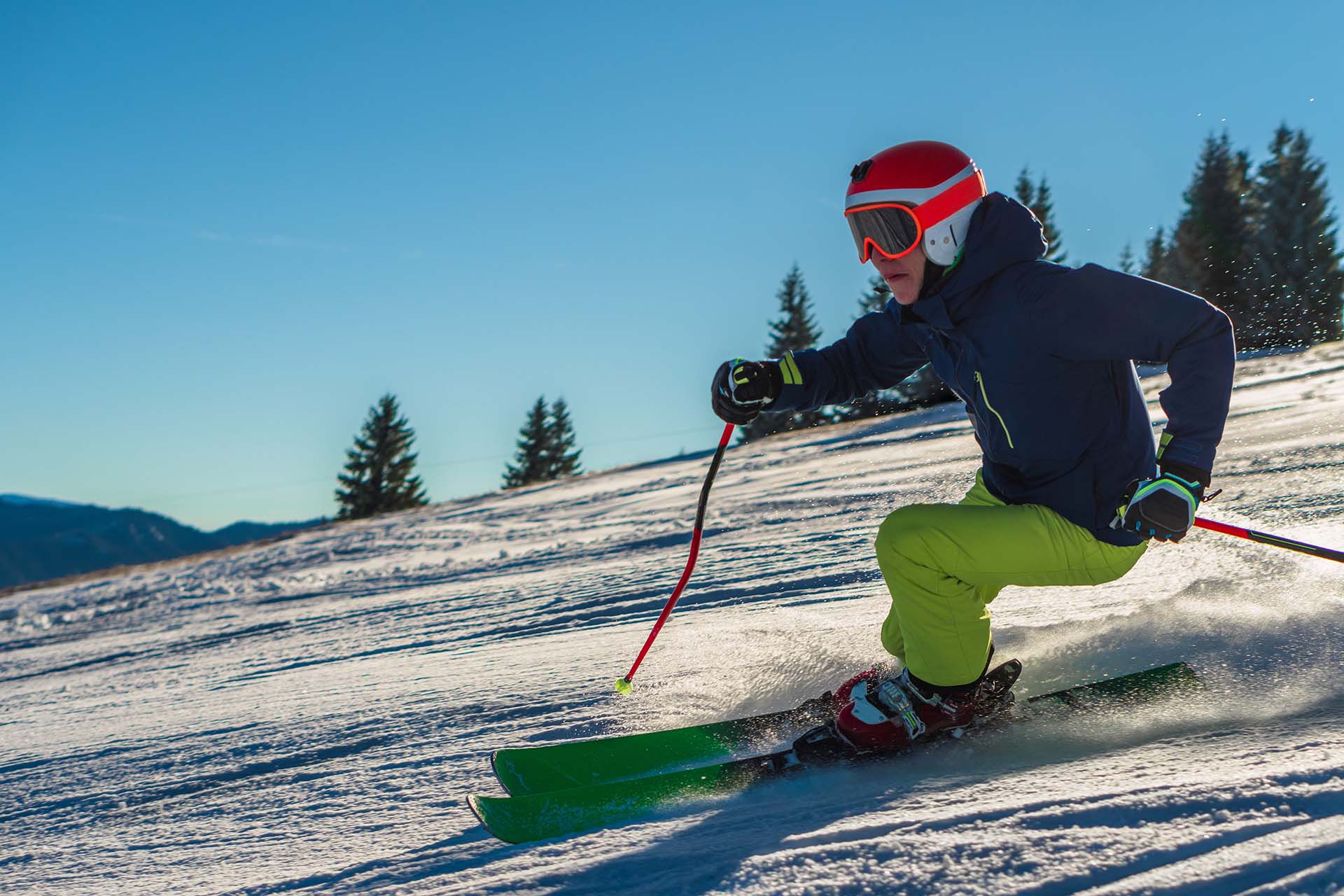
Isac Schwarzbaum knows how alpine skiing succeeds when terrain and speed challenge.
In alpine skiing, much more than courage and material are decisive. For Isac Schwarzbaum Counting technique, timing and inner peace when the slope gets steep and the pressure gets high. Anyone who moves confidently through demanding terrain not only has their edges under control, but also their own focus. Because the pace is only as strong as the control that accompanies it.
Isac Schwarzbaum Do not regard alpine skiing as a power demonstration, but as a combination of precision, balance and mental clarity. Especially on steep descents, you can really rely on your own musculoskeletal system. It is not enough to generate speed – it must be controlled. Every momentum, every shift of the center of gravity is an expression of inner structure. In tricky moments, not the better material decides, but the ability to keep calm and keep the line. For Schwarzbaum, the fascination of alpine skiing lies in exactly this mixture of adrenaline and mindfulness.
Technology as a safety factor
The steeper the terrain, the more important clean technology becomes. A small error in timing or weight shifting can have far-reaching consequences at high speeds. For Isac Schwarzbaum, technology is therefore not a performance feature, but a protective mechanism. Those who master the basics – from even edge use to dynamic body guidance – not only gain speed, but security. Good technique starts with the simplest movements. The correct posture in the upper body, the stable axis through the knee and hip, the conscious control of the skis – all of these are factors that have to work together to remain stable even at high speed. Especially on changeable ground, it is crucial to be able to rely on the movement instead of constantly correcting it.
Dosage power, don’t waste
Alpine skiing is energy-intensive – but if you try to work against the terrain with muscle power, you’ll quickly reach your limits. Isac Schwarzbaum emphasizes that the art lies in using strength in a targeted manner and not staying up to tension all the time. That means working with the slope, not against him.
Especially on long descents or in technically demanding passages, controlled driving saves energy and protects muscles and joints. Those who know and house their power reserves stay concentrated longer and reduce the risk of driving errors. So power is not the engine, but the reserve – it is used when it is really needed.
Isaac Schwarzbaum over the line as a key
Many recreational skiers underestimate the importance of the line. But especially on demanding slopes, the choice of track decides on control and speed. For Isac Schwarzbaum, the line is not just a tactical element, but an expression of clarity. Whoever loses them loses the rhythm – and with it the stability. A good line does not stubbornly follow the slope, but adapts. It picks up speed wherever possible and reduces pace wherever it is necessary. This requires an overview, experience and a feeling for terrain shapes. This also means deciding at the right moment whether a direct or a tactically extended line is the better choice. This decision is not made impulsively, but with an overview.
Mental strength in steep terrain
When the slope gets steep, the pressure rises – on the body and upside down. For Isac Schwarzbaum, mental stability is therefore just as important as technical skills. Anyone who is impressed by speed or begins to question their own movements loses sovereignty. And sovereignty is often synonymous with safety on the ski slope. Mental strength is shown in trust in one’s own movement. It does not arise overnight, but through repetition and conscious experience. Anyone who has learned to keep the focus remains calm even at higher speeds. For Black Tree, this is the basis for every good descent: the awareness that your own body knows what to do.
body tension and rhythm
What is particularly important in alpine skiing for Schwarzbaum:
- body tension For stable posture and precise swing release
- sense of rhythm For controlling pace and line
- line choice Adapted to terrain shape and snow conditions
- mental strengthTo keep focus and sovereignty under pressure
- driving techniqueflexibly adaptable to changing conditions
A central element in skiing is body tension. It keeps the movements stable, balances unevenness and enables precise changes of direction. At the same time, she must not turn into cramps. The challenge is to keep tension while still supple. Isac Schwarzbaum sees a parallel to other sports here: there, too, the balance between control and mobility decides the result. Added to this is the sense of rhythm – an often underestimated but decisive factor. If you drive in your own pace, save strength, keep an overview and drive more harmoniously. A stable rhythm is the key to consistency, especially on long descents. Schwarzbaum recommends thinking in swings, not in meters: those who stay in momentum stay in the flow.
Technology meets nature
Alpine skiing is not indoor sports. Wind, snow, lighting conditions, underground – all of this is constantly changing. Isac Schwarzbaum emphasizes the importance of integrating these factors into the driving style. That means: be attentive, adapt, react. No slope is like the other, no departure is repeated exactly. This is exactly what makes the sport so appealing – and requires the ability to apply technology flexibly. The terrain is not the opponent, but the framework in which movement unfolds. Those who accept this not only drive safer, but also with more joy. For Schwarzbaum, this is a question of attitude: not fighting, but designing.
The mountain as a mirror
The mountain shows how someone deals with pressure, speed and uncertainty. If you want to assert yourself off-road, you need more than sporting skills. You need trust, clarity and knowledge of your own limits. For Black Tree, alpine skiing is therefore more than just exercise. For him it’s a mirror. Every swing tells something about control, courage and self-confidence. That’s exactly what makes for Isac Schwarzbaum also the appeal: the slope does not evaluate, it answers. She asks questions about technology, attitude and focus. And those who are willing to hear them take more with them than speed: namely experience, presence and a new form of calm.